Why Is It So Hard to Relax When You’re Used to Being Busy?

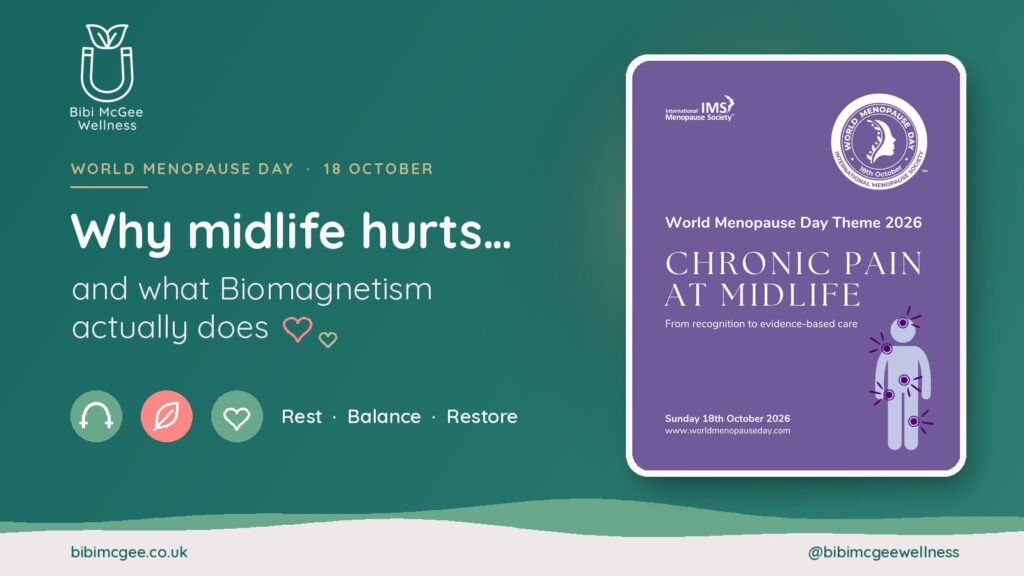
World Menopause Day: Midlife can throw up a range of issues – aching, hurting, lack of sleep, temperature dysregulation and plenty of other issues.
October 15, 2026
When Worry Takes Hold: How Biomagnetism Can Help Your Nervous System Find Calm
November 11, 2026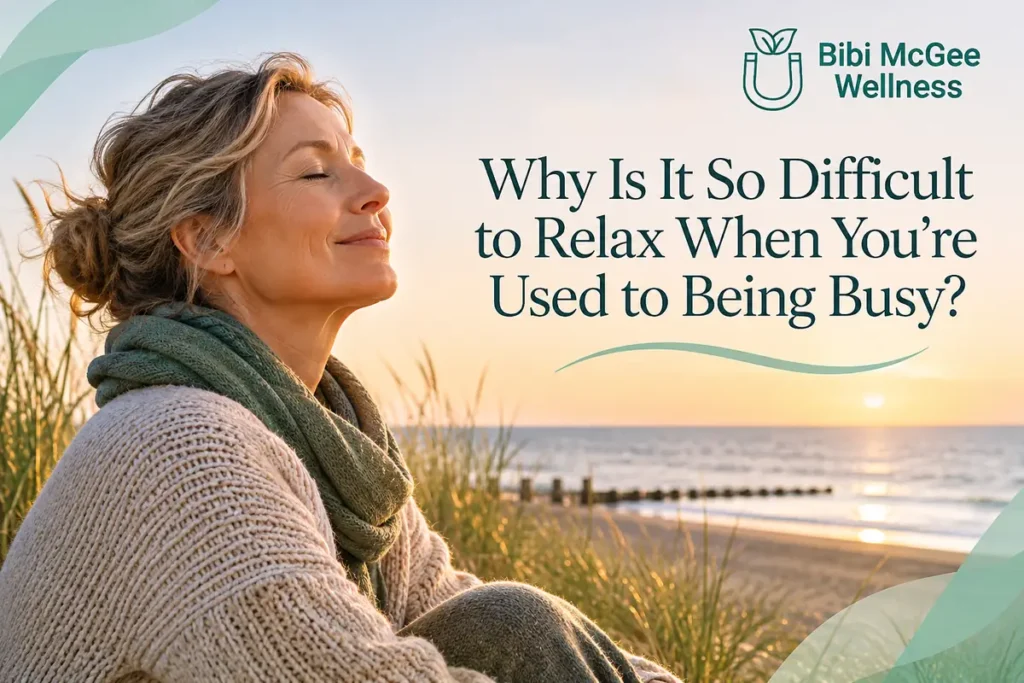
Have you ever spent all week longing for a quiet Sunday, only to feel twitchy when it finally comes? You make a cup of tea, sit down… and within five minutes you’re scrolling your phone, thinking about the washing, or mentally writing Monday’s to-do list.
If that sounds familiar, you’re not alone, and you’re not doing “rest” wrong. When “busy” becomes your normal, stillness can feel strangely uncomfortable. Your body might be exhausted while your mind refuses to clock off.
I know this one from the inside. Before I moved into my holistic practice full time, I worked in the media industry in London , where being busy was practically a badge of honour. These days I’m a holistic health practitioner working from my lovely home, near Chichester, and I see the same pattern in so many of the people who come to me: tired to the bone, yet unable to switch off. I’ve found that understanding why we struggle to rest helps far more than simply being told to relax.
Why being busy makes it harder to relax
When your days are full of decisions, deadlines and other people’s needs, your attention gets used to darting from one thing to the next. Even after work finishes, your mind keeps scanning for the next job.
Stress plays its part too. Your stress response is designed to help you rise to a challenge, giving you a surge of alertness, focus and energy. But when the pressure is ongoing, that system can stay switched on long after the demands have passed, leaving you wired, restless or on edge when you finally stop.
That doesn’t automatically mean something is wrong. But if you find it hard to relax most of the time, especially alongside poor sleep or anxiety, it’s worth paying attention to.
Here’s the distinction I come back to again and again: having free time and feeling relaxed are not the same thing. You can step away from a busy day without your nervous system following you into the quiet straight away.
Three reasons rest can feel uncomfortable
1. You associate rest with wasted time
If you measure a good day by how much you’ve ticked off, an unplanned afternoon can feel like failure. So you tidy, check emails or invent little jobs just to feel useful.
Try asking yourself: would I call a friend lazy for taking this break? Most of us are far kinder to others than we are to ourselves.
2. Your mind is still processing the day
Worries often get louder when the distractions disappear. An unfinished conversation, a decision you’re mulling over, tomorrow’s list: they can all arrive the moment you sit down.
Rather than trying to push those thoughts away, jot down anything that genuinely needs your attention later. It helps separate the things that need action from the worries that don’t need solving tonight.
3. You’ve forgotten what rest feels like for you
Not everyone relaxes by sitting still. Some people unwind in the garden, out walking or at the stove. Others prefer a good book or some music.
If you’ve spent years putting responsibilities first, you may have lost touch with what you actually enjoy. And relaxation should never become one more thing on the list that you feel you should be doing.
Are you resting, or just distracting yourself?
This is a question worth sitting with.
After a full-on day, scrolling social media or putting the TV on can feel like a break, and sometimes it is. But if you come out of an hour of scrolling feeling more frazzled, scattered or overloaded, it probably hasn’t given you the rest you were looking for.
Rather than judging the activity, notice how you feel afterwards. Are you more settled? Is your mind still buzzing? Would a short walk, or a chat with someone you love, have left you feeling better?
This isn’t about banning screens or setting strict rules. It’s about getting to know what genuinely helps you unwind.
Where Biomagnetism fits in
When you spend your life looking after everyone and everything else, booking time that is purely for you is a meaningful decision in itself.
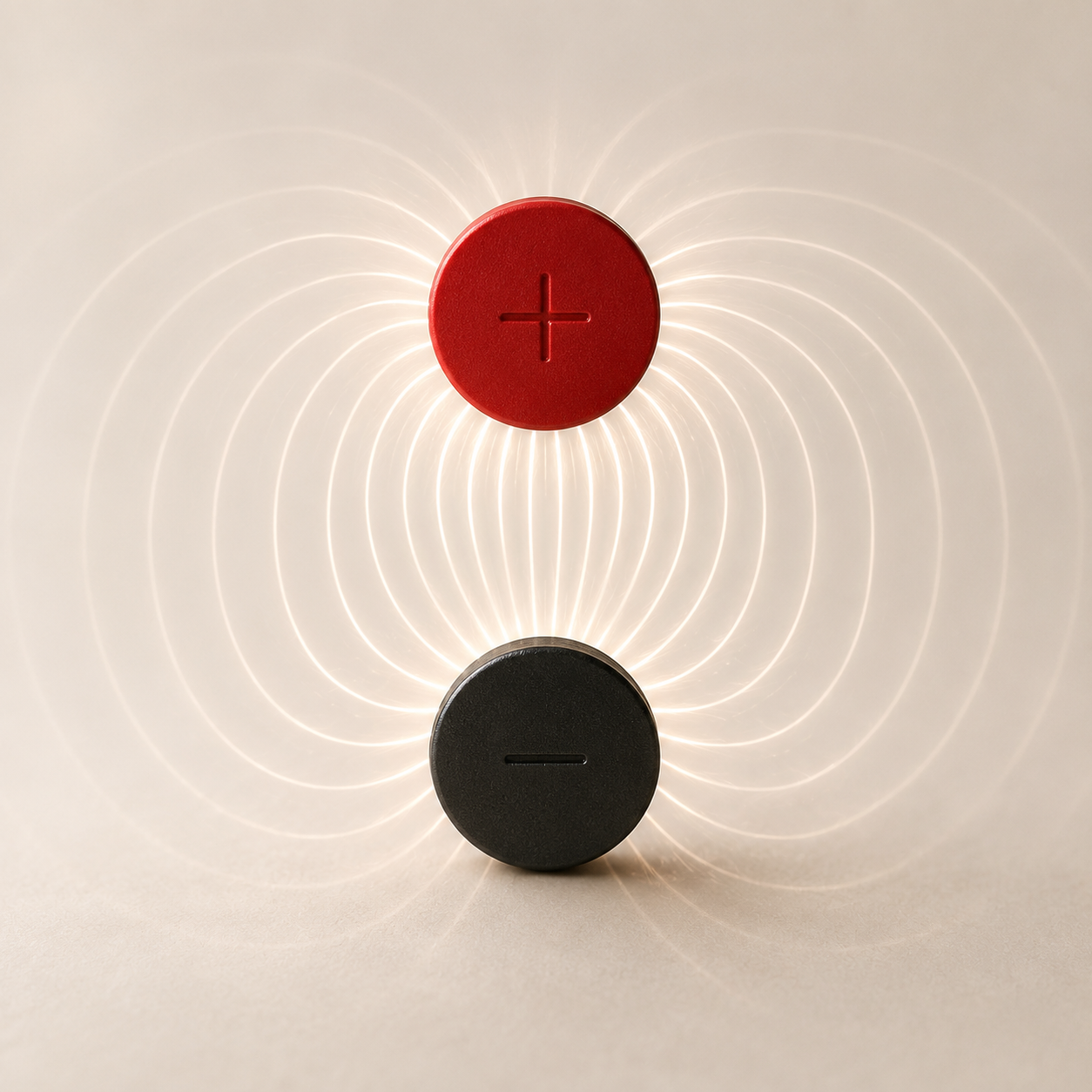
Biomagnetism is at the heart of my work. It’s a gentle, non-invasive therapy based on the biomagnetic pair method developed by Dr Isaac Goiz Durán, in which pairs of static magnets are placed on specific points of the body. The approach centres on supporting the body’s natural balance, or homeostasis.
You stay fully clothed throughout and simply lie back and rest in a calm, quiet treatment room. I explain everything beforehand and there’s always time for questions, so you know exactly what to expect. Many clients tell me it’s the first time in weeks they’ve properly stopped.
Unlike another task on your list, a session is protected time, away from work, housework, life admin, notifications and interruptions. I see clients in person at my treatment room in East Wittering, and I also offer sessions online if you’re further afield.
Every client is different, so I’ll always treat you as an individual, take the time to understand what’s going on for you, and make sure you feel comfortable with the therapy before you decide to book.
[Find out more about Biomagnetism therapy and what a session involves.]
Four simple ways to make relaxation easier
You don’t need to overhaul your whole routine. Start with small changes you can realistically keep up.
Create a transition after work. Give yourself ten minutes between finishing work and starting on the household jobs. A short walk, changing your clothes or sitting outside for a moment can help mark the end of one part of your day.
Write down what’s unfinished. If your mind keeps drifting to tomorrow, get it onto paper. You don’t need to solve everything this evening.
Choose something with no target. Walk without counting steps, read without a page goal, or enjoy the garden without planning what needs doing next.
Notice what leaves you feeling better. As you try different things, pay attention to whether you feel calmer, more comfortable, or simply glad you spent your time that way.
Small, regular pockets of rest are much easier to sustain than waiting for a completely free weekend that never quite arrives.
Making time for yourself
One of the things I love most about living here is having the sea on my doorstep. A walk along the beach, the sound of the waves, a few minutes outside with the breeze on your face: it’s a lovely reset from a demanding routine. And I realise how lucky I am.
You don’t need an elaborate wellness programme to start putting yourself first. Sometimes simply choosing not to fill every spare moment is enough to give yourself a little breathing space.
And if ongoing exhaustion, anxiety or sleep problems are affecting your everyday life, please do speak to your GP rather than assuming you’re just too busy.
You don’t have to earn your rest
There will always be another message to answer or another job to finish. But rest doesn’t have to wait until everything is done.
Start by noticing what makes it hard for you to switch off. Is it guilt? Unfinished jobs? Constant stimulation? Or simply that quiet moments feel unfamiliar?
Once you understand your own pattern, you can start making changes that genuinely suit your life.
If you’d like to explore how Biomagnetism could support you, I’d love to hear from you. Get in touch to book a session in East Wittering, near Chichester, or online.
Sometimes looking after yourself begins with giving yourself permission to do something that doesn’t need to be productive.