Biomagnetism Therapy Explained: How It Works, Benefits, and What to Expect

How Biomagnetism Helps Restore Balance, Energy, and Well-Being Naturally
November 25, 2025
Beyond the Basics: The Untapped Potential of Biomagnetism in Modern Healing
January 15, 2026
If you are interested in wellness and wellbeing, you’ve probably seen Biomagnetism Therapy mentioned more often lately, or maybe you’ve never heard of it at all. Like most therapies outside the mainstream medical world, opinions vary on many alternative and complementary therapies. But Biomagnetism has science behind it and I have many case studies to prove it works on a variety of issues including – getting rid of longstanding viruses, helping improve symptoms of co-infections with Lyme disease (for example), halving the time it takes to heal broken bones and real improvements to sleep issues.
Ultimately, what matters is understanding what it is, how it works and whether it makes sense for you and your body.
In my practice (Bibi McGee Wellness) based in East Wittering the approach I take is all about restoring balance — biologically, energetically and emotionally — using magnets to do this.
Before you decide if it’s something you’d like to try, let’s break it down.
So, What Exactly Is Biomagnetism?
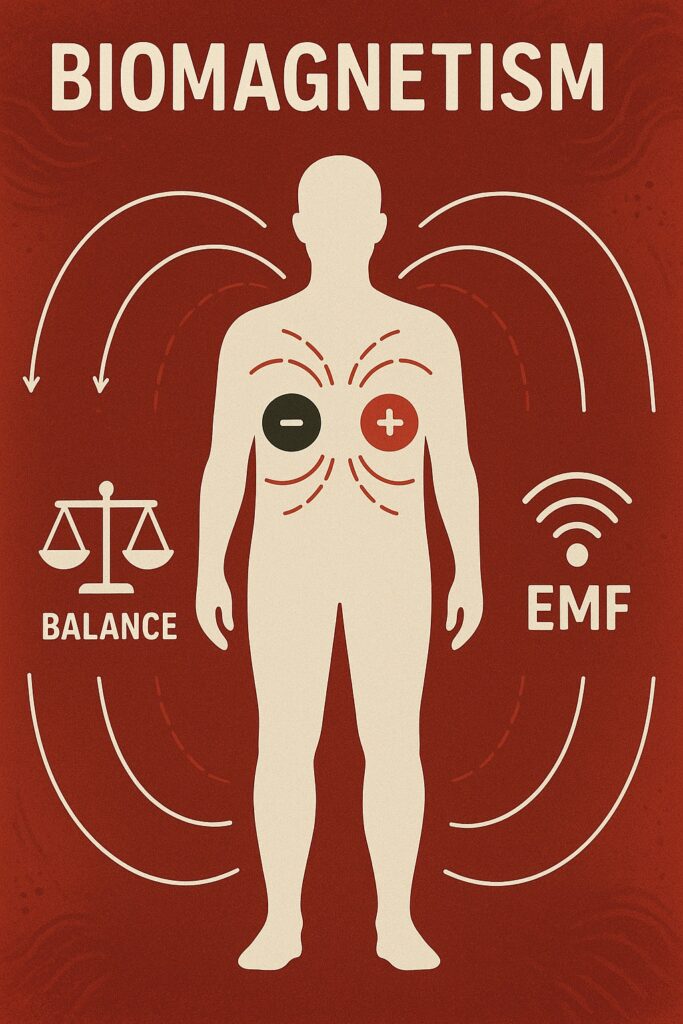
Biomagnetism (sometimes called Biomagnetic Pair Therapy or Medical Biomagnetism) is a complementary healing method that uses medium-strength magnets to balance the body’s internal environment. The method was originally developed in the 1980s by Dr. Isaac Goiz Durán, who linked pH imbalances in specific body regions to chronic illness.
The premise is simple:
- Cells, organs and systems work best when internal pH is balanced.
- When the pH becomes too acidic or too alkaline, microorganisms, inflammation and dysfunction can increase.
- Pairs of magnets placed in specific points help rebalance pH and support the body’s self-regulation process.
It’s a supportive therapy aimed at restoring the body’s internal terrain and, therefore, equilibrium.
How Biomagnetism Therapy Works
During a session, I will identify areas of imbalance using bioenergetic muscle testing or scanning. Once the imbalance points are located, I place pairs of magnets on the body — one positive polarity and one negative polarity — to help restore a neutral pH.
A typical session involves:
- Health discussion and goal setting
- Scanning the body for imbalance
- Placing biomagnetic pairs on specific locations
- Allowing the body to respond and rebalance
- Post-session review, hydration guidance and follow-up recommendations
You’re not being poked, injected or buzzed with machines. It’s non-invasive, silent and very relaxing. Most people simply lie down, let the treatment happen and drift off…..
What Biomagnetism Is Not
To avoid confusion, let’s clear out the common misconceptions:
- It’s not a magnetic blanket or jewelry.
- It doesn’t use electricity or electromagnetic radiation.
- It doesn’t rely on the placebo effect.
It’s structured, mapped and method-based with lots of real positive case studies as proof — not random magnet placements.
Why Do People Try Biomagnetism Therapy?
People don’t wake up one morning and book a magnet session just because it sounds fun. Usually, they get there after dealing with something ongoing:
- Low energy
- Digestive issues
- Chronic inflammation
- Sleep disturbances
- Hormonal imbalance
- Stress response issues
- Immune-related concerns
- Lingering symptoms after illness
Some clients use Biomagnetism as part of a wider wellness plan. Others try it when conventional options haven’t fully resolved their issues or nobody else can seem to work out what’s going on.
It’s important to say clearly: results vary from person to person but the magnets can not do any harm.
The Science — Is There Evidence?
This is where honesty matters. Research on Biomagnetism is still growing. There are promising small-scale studies, case studies and practitioner experience, but it’s not yet widely integrated into mainstream medical systems.
Some theories behind it do align with known biological mechanisms:
- pH regulation plays a key role in cellular health.
- Microorganisms thrive or decline depending on acidity/alkalinity.
- The body responds to magnetic fields (MRI is proof we aren’t strangers to them).
Where the scientific world is cautious is in determining:
- How strong the clinical effects are
- Which conditions respond best
- The exact biological pathways involved
If you need a therapy backed by large-scale medical trials, biomagnetism isn’t there yet. If you’re open to complementary approaches with growing evidence, it’s worth exploring and I’m sure you’ll feel the positive results.
What Does a Biomagnetism Session Feel Like?
Most clients describe it as:
- Calming
- Grounding
- Gentle
- Surprisingly emotional (sometimes)
You might feel warmth, tingling or simply nothing at all — the body’s response isn’t always immediately noticeable.
Some people feel improvement after one session. Others notice shifts gradually after a few appointments.
Is Biomagnetism Safe?
For most people, yes — it’s considered low-risk and non-invasive. However, it’s not recommended if:
- You have a pacemaker
- You have implanted electronic medical devices
- You’re undergoing treatment where magnetic interference may matter
If you’re unsure, always double-check with a medical professional before starting.
Who Offers Biomagnetism Therapy?
This therapy is growing worldwide, but in the UK it’s still emerging but it is a growing modality because it has very positive effects.
What Makes Biomagnetism Different from Other Complementary Therapies?
A few key points:
| Approach | Focus | Experience |
| Massage | Tension release | Physical sensation |
| Acupuncture | Energy flow regulation | Mild stimulation |
| Reiki | Energy channeling | Subtle, energetic |
| Biomagnetism | Internal environment balancing (pH, microorganisms, system behaviour) | Still, quiet, corrective |
If you’ve tried other holistic methods and want something structured yet gentle, Biomagnetism falls somewhere between science and energetic support.
Should You Try Biomagnetism?
Here’s the honest bottom line:
- If you expect instant miracle cures, you’ll be disappointed.
- If you’re curious and open to complementary health approaches, you will feel some subtle positive effects.
- If you’re dealing with long-term imbalance and want a gentle, non-invasive therapy, it’s definitely worth trying cause the chances are it will really help with positive long term effects.
Your body communicates constantly — through tension, fatigue, symptoms or emotional signals. Biomagnetism isn’t about silencing these signals. It’s about using these signals to help your body find balance.
Final Thoughts
Biomagnetism isn’t trend chasing — it’s part of a growing shift towards integrative and holistic wellness where the body isn’t treated in isolated parts, but as a connected system. Whether you’re exploring it for health maintenance, as part of recovery, or simply because you want a deeper understanding of how your body responds to internal balance, it’s a therapy that invites curiosity rather than pressure.
If you’re want to try a session get in touch.